Marble, granite & terrazzo restoration across Ontario since 1972
Call (905) 270-2959Marble, granite & terrazzo restoration across Ontario since 1972
Call (905) 270-2959Natural Stones
Polished or honed stone: how each finish looks, feels, etches, and needs sealing on floors, counters, and showers, and how to change it later.
No obligation · We reply within one business day
By The Marble Clinic, stone restoration in the GTA since 1972
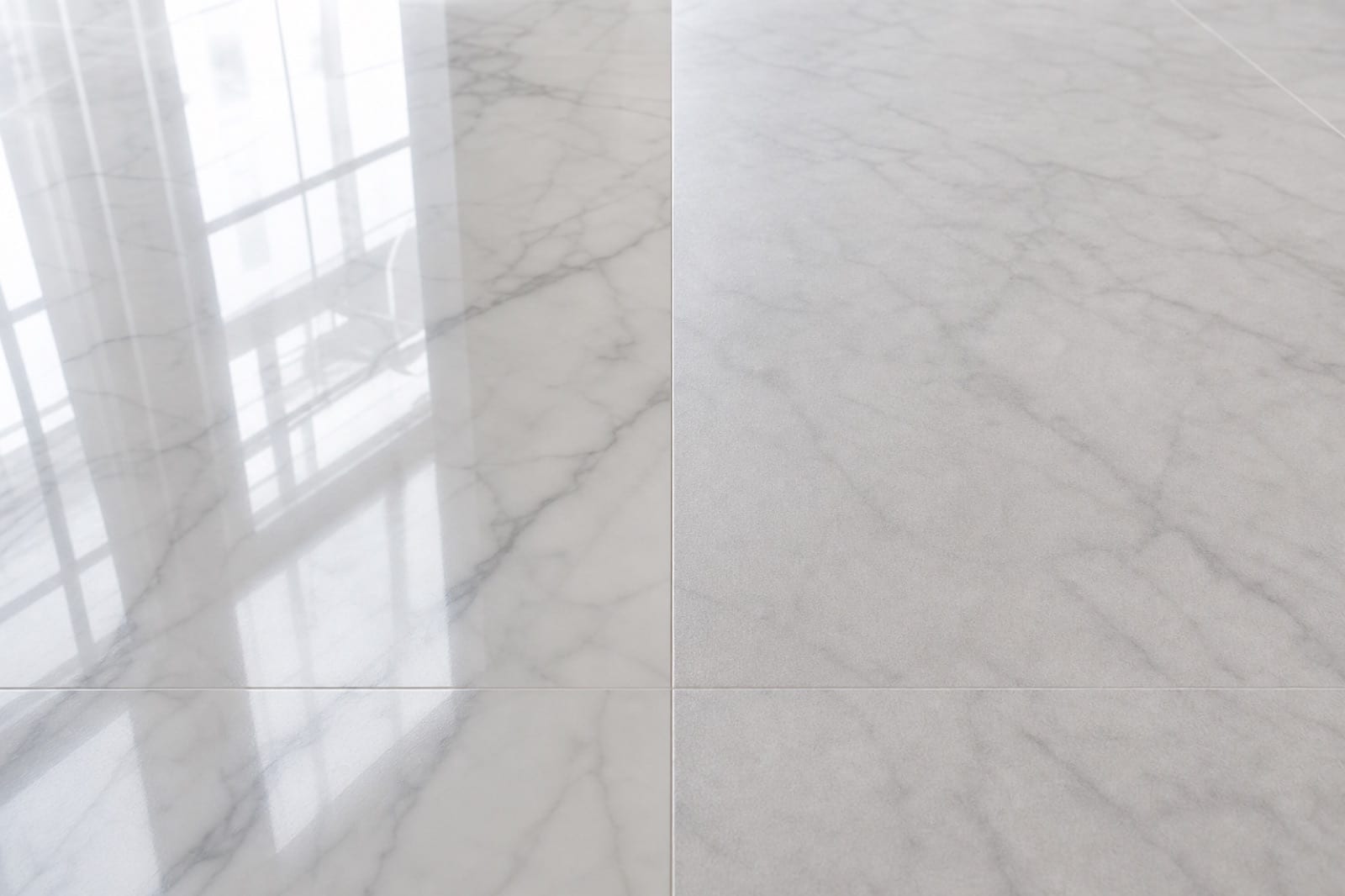
Once you've chosen marble, granite, limestone, or travertine, the fabricator will ask: polished or honed? The finish decides how slippery the stone is when wet, how much etching shows, and how often you seal it.
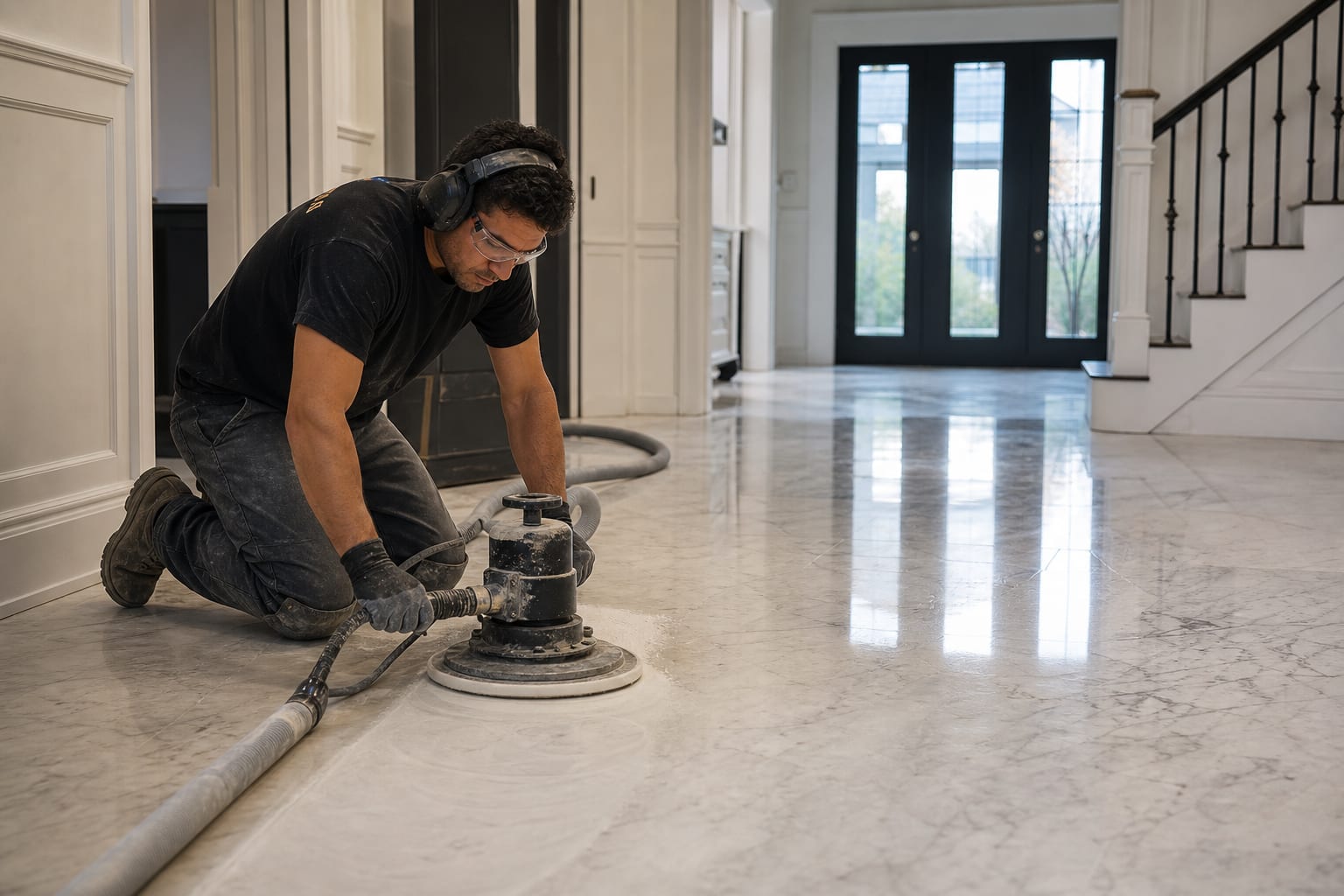
Both finishes come from grinding the stone with finer and finer diamond pads. Honing stops early and leaves a matte surface; polishing carries on to a mirror shine. We change finishes in GTA homes every week without replacing the stone, so neither choice is permanent.
A polished finish is the glossy, mirror-like surface most people picture on a high-end counter.
Good points
Drawbacks
Best for: Kitchen counters (if you're ready to deal with etching), formal bath vanities, feature walls, and foyer floors that stay dry.
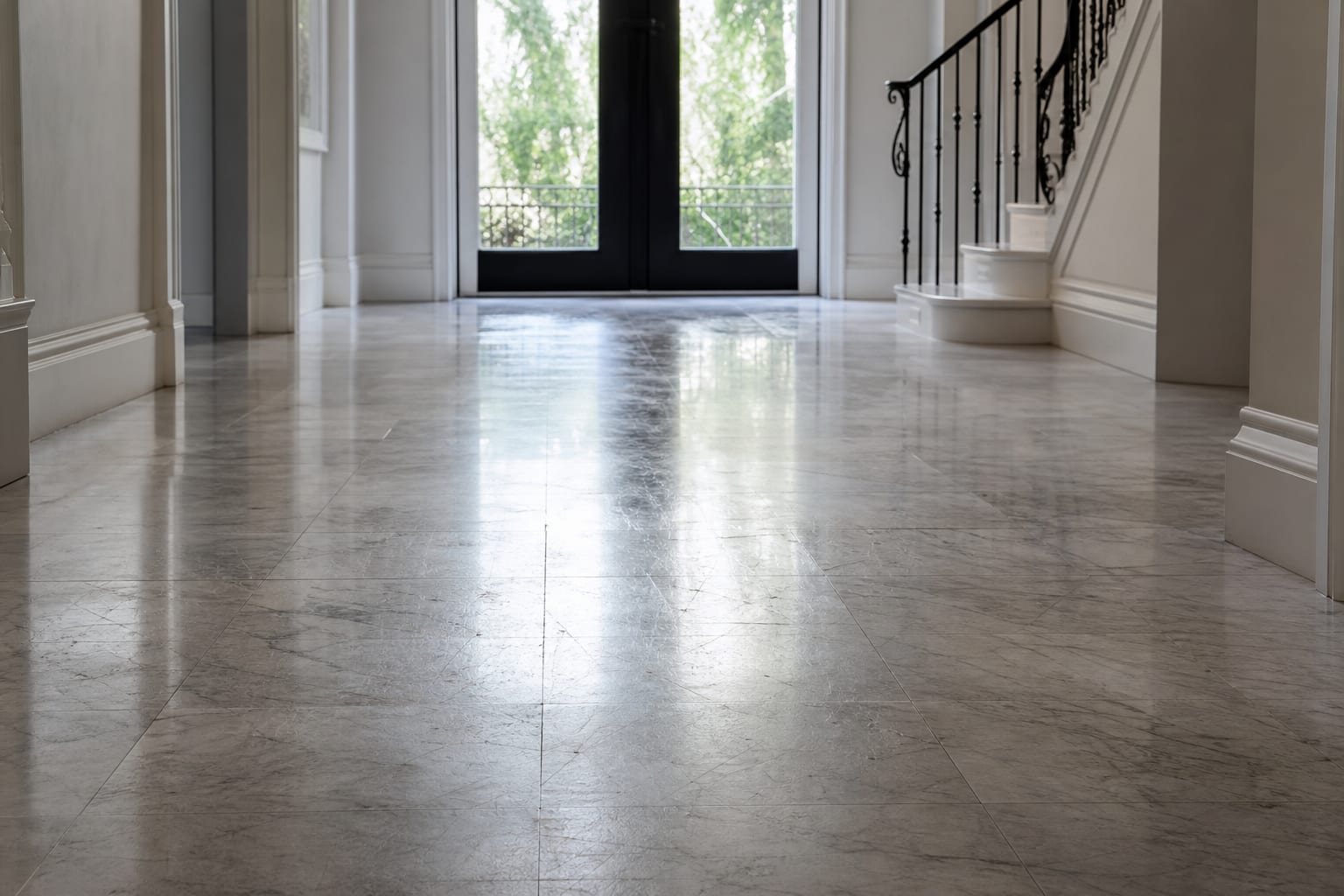
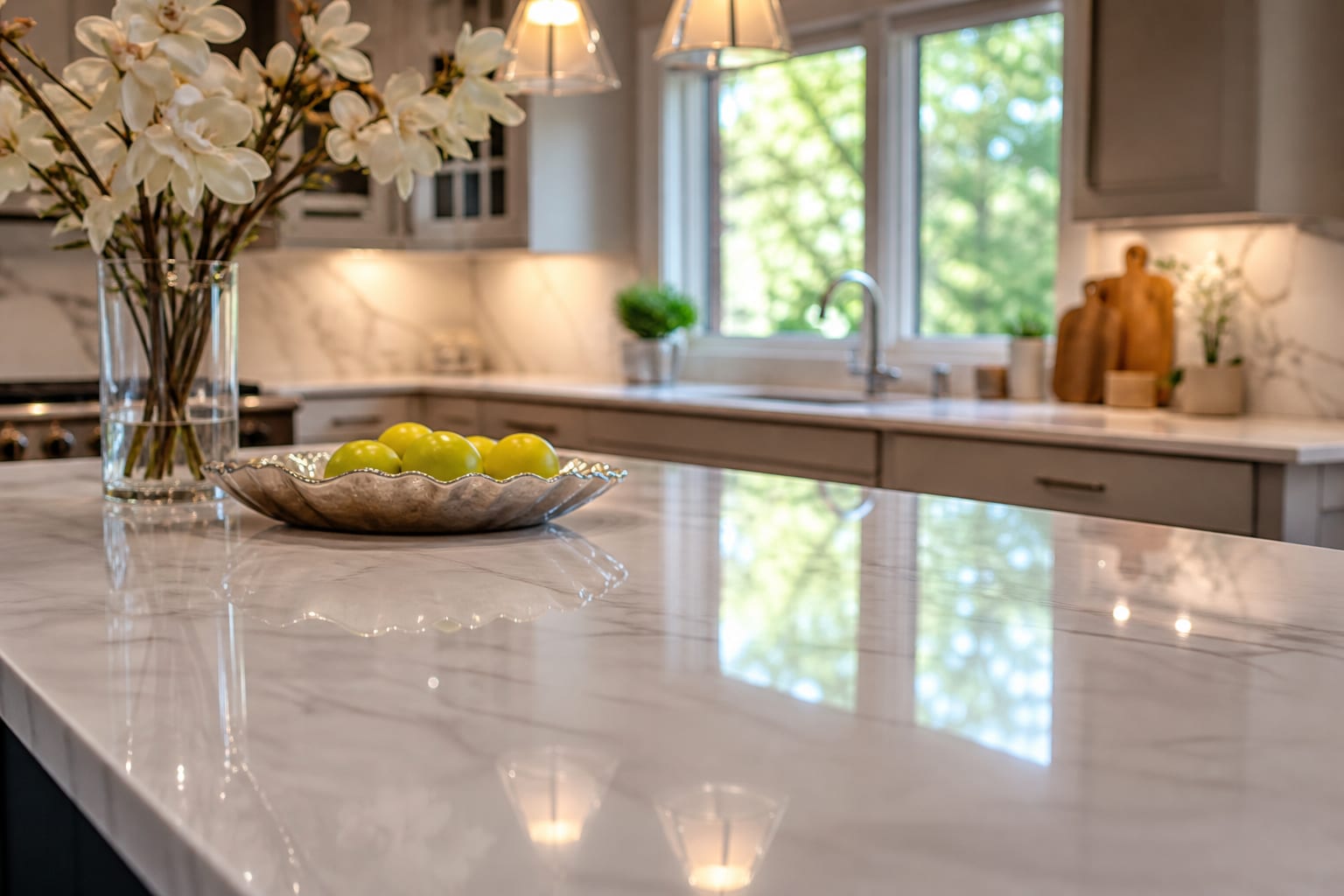
Care note: Etch marks stand out on polished marble, so check the stain vs. etch guide before you treat a ring. Polish from a bottle won't remove a true etch; see marble etching.
A honed finish is satin or matte, with little reflection.
Good points
Drawbacks
Best for: Bathroom floors, shower bases, entry floors, commercial lobbies that need grip, and anyone who likes a soft, muted European look.
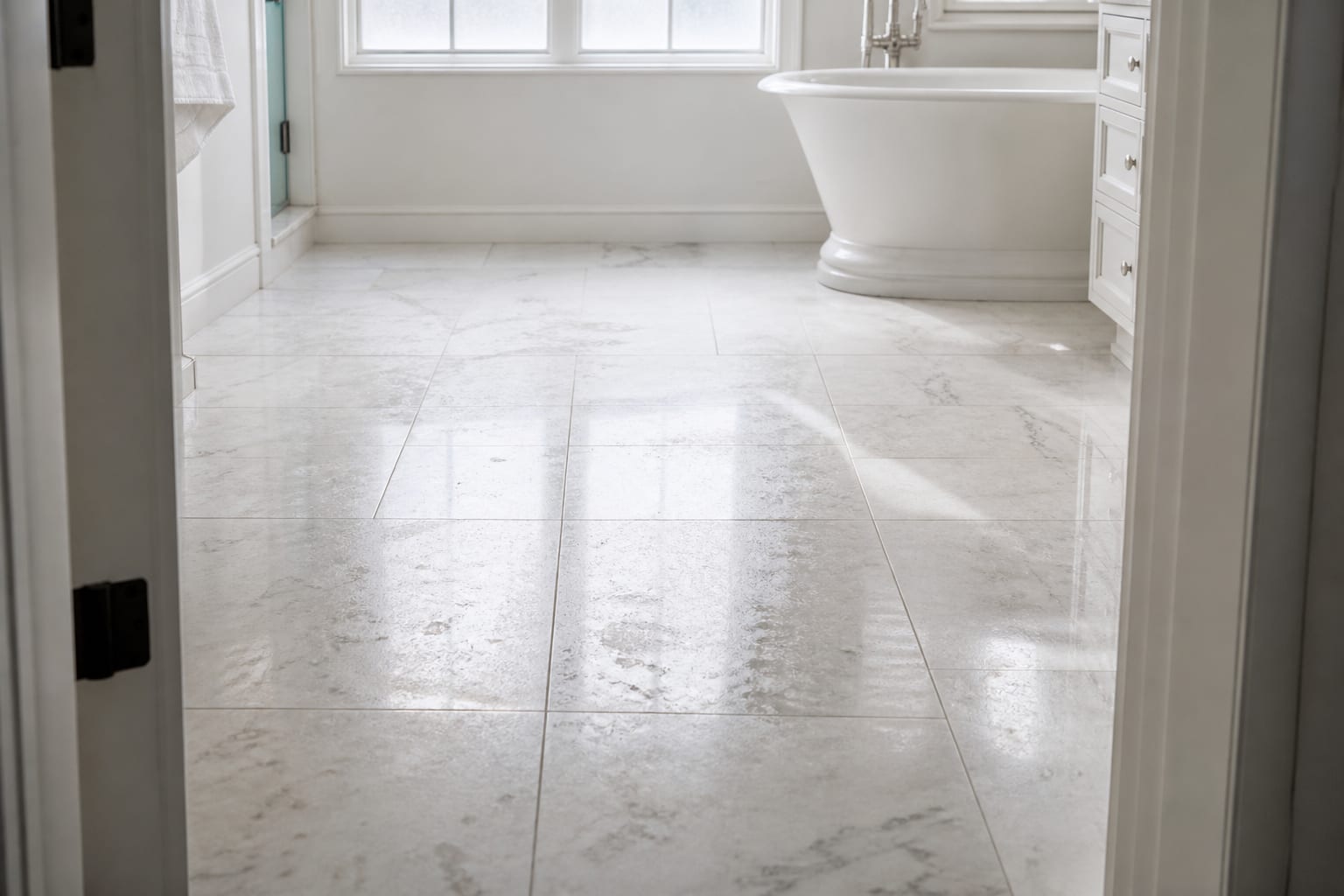
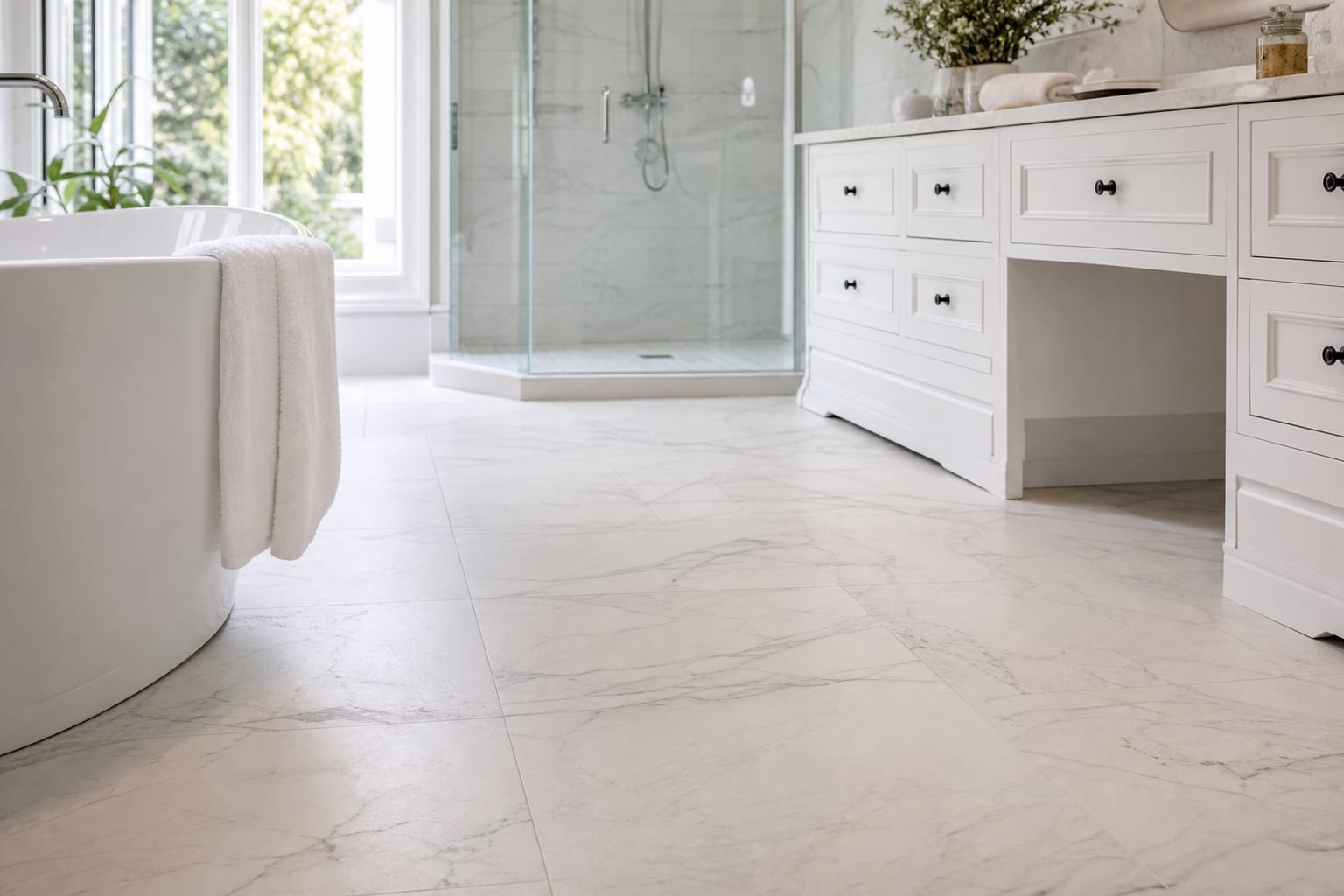
Care note: Do the water-bead test on schedule. Cloudy shower walls may need grout restoration as well as sealer.
| Factor | Polished | Honed |
|---|---|---|
| Look | Glossy, reflective | Matte, satin |
| Etching on marble | Shows clearly | Less obvious at first, still there |
| Grip when wet | Lower | Higher |
| Sealing | Moderate | Often more frequent |
| Scratches | Show in glare | Sometimes less obvious |
| Changing it later | Can be honed | Can be polished |
| What to expect | Shiny until daily life marks it | A soft look that still needs care |
Polished and honed pieces of one slab can look like two different stones. Ask for a sample in the finish you'll live with, and look at it where it will go: floor samples at floor level, counter samples at counter height.
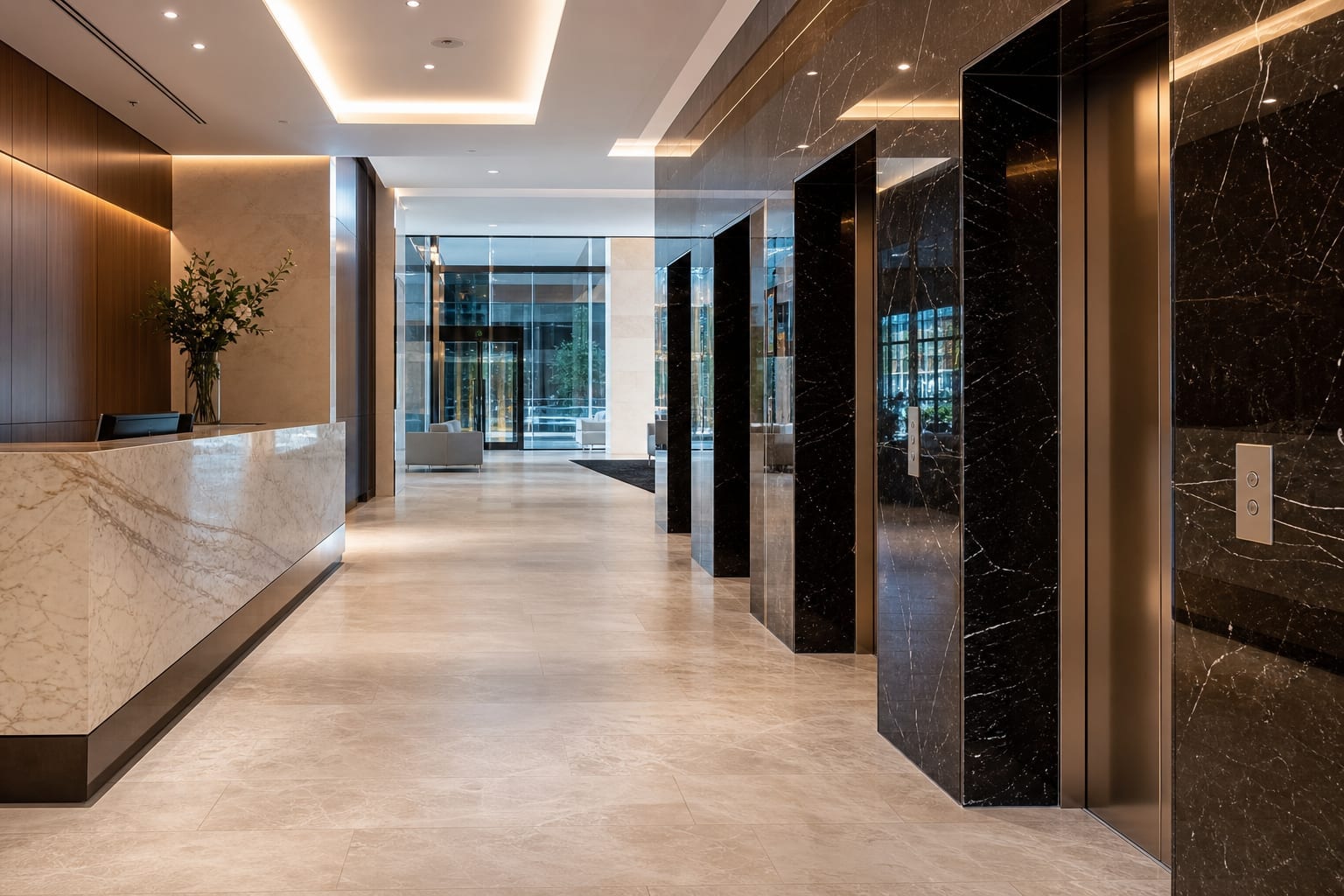
Lobby and retail floors take heel traffic, cleaning carts, and salt. Facility managers usually choose honed or satin for grip and book regular maintenance rather than chase a mirror shine in a corridor.
Polished marble works in quieter spots, such as elevator surrounds and reception desks, where acids are kept away and etch removal is in the budget. Honed stone needs sealing more often, but it leads to fewer slips and shows less etching under fluorescent light.
Yes, within reason. We hone polished floors for better grip and polish worn honed foyers to brighten them, using diamond pads on the stone you already have. If you're choosing the finish late in a renovation, leave room in the schedule for the work.
Switching doesn't suit thin veneers, or stone already ground down to its minimum thickness. We check before we promise a change of shine.
Already installed and don't like the look? Send photos of the surface and the look you want (glossy, satin, or matte), and we'll quote diamond restoration where it makes sense.
Related guides:
Stone problems
Our stone problem guides go through etching, stains, scratches, grout, pitting, and more, and explain how we fix each one.
Browse stone problemsFree quote
Send photos or ask us to visit. We'll tell you what the stone is, how we'd fix it, and what it will cost.
No obligation · We reply within one business day