Marble, granite & terrazzo restoration across Ontario since 1972
Call (905) 270-2959Marble, granite & terrazzo restoration across Ontario since 1972
Call (905) 270-2959Basics
How to seal, clean, and protect marble counters, a simple care schedule, and the signs that a counter needs professional help.
No obligation · We reply within one business day
By The Marble Clinic, stone restoration in the GTA since 1972
Marble countertops hold up well once you know how the surface behaves. The stone is strong, but acids etch the polish, oils stain it, and grit scratches it.
Over fifty years and more than 25,000 projects across the GTA, we've found that people who seal regularly, use the right cleaner, and wipe up spills quickly keep marble looking new for decades. Everyone else needs honing and polishing sooner than they expected.
Marble absorbs liquid. A sealer that soaks into the stone slows that down without changing the look of polished marble. Test before you reseal; don't go by the calendar.
The water-bead test: Put a few drops of water on the counter and check after five to ten minutes.
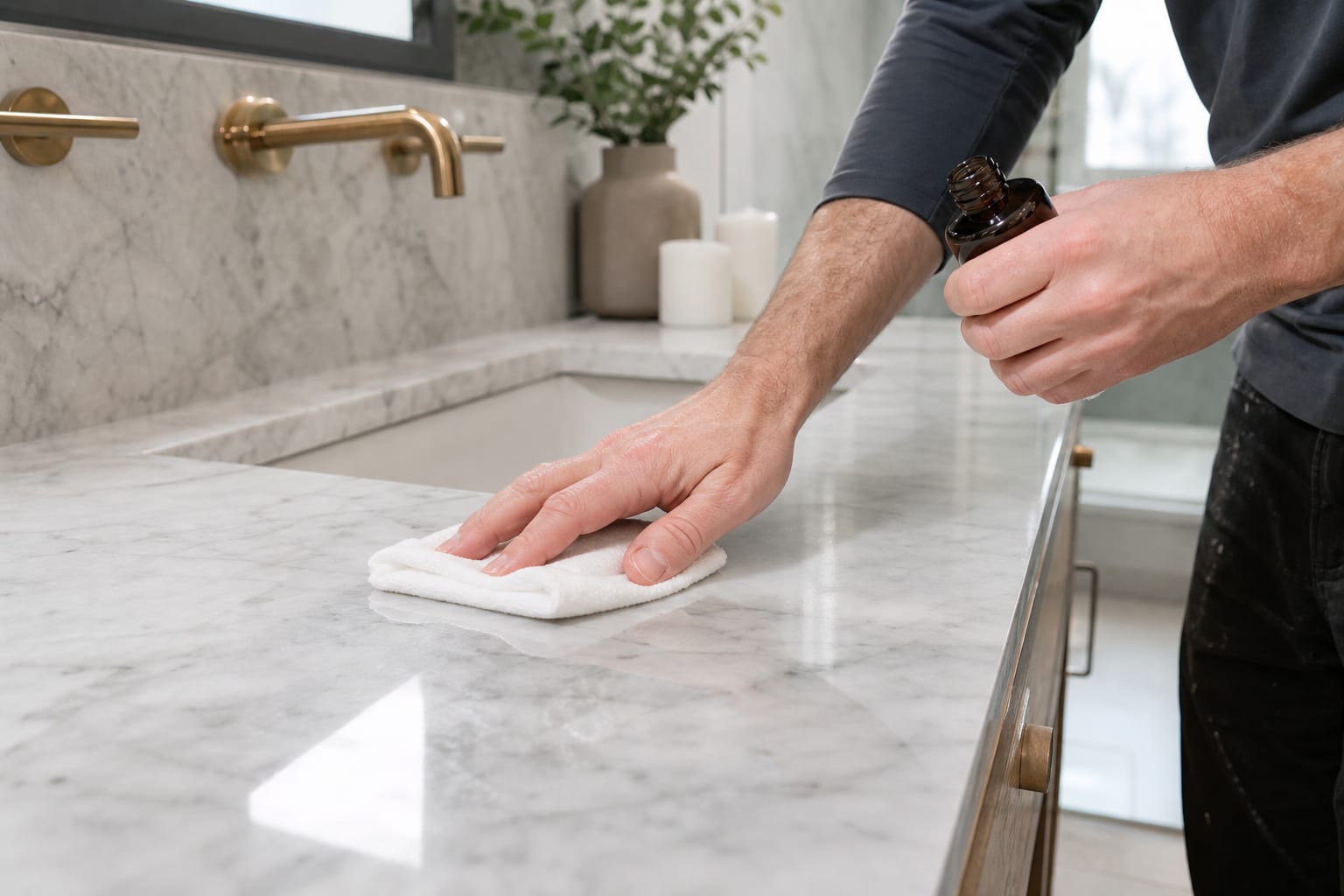
At home: Clean the counter, let it dry fully, apply a sealer made for marble as the label says, and wipe off the excess before it cures.
How often: We recommend professional sealing every one to two years for kitchen counters, or sooner if you cook a lot or use the counter as a bar.
Lots of new marks at once usually means the sealer has failed and the polish is worn too. Resealing won't remove etching, so you may need etch removal first.
When a mark won't clean off, run the stain vs. etch test before you reach for a poultice or polish (see marble etching for why).
Acidic and abrasive cleaners wear away the polish. Use a pH-neutral stone cleaner and a soft microfibre cloth, and rinse if the cleaner leaves a film. On honed (matte) marble, a slightly weaker mix reduces haze.
Never use vinegar, lemon, harsh chemicals, bathroom sprays, magic erasers, or powder cleansers on marble.
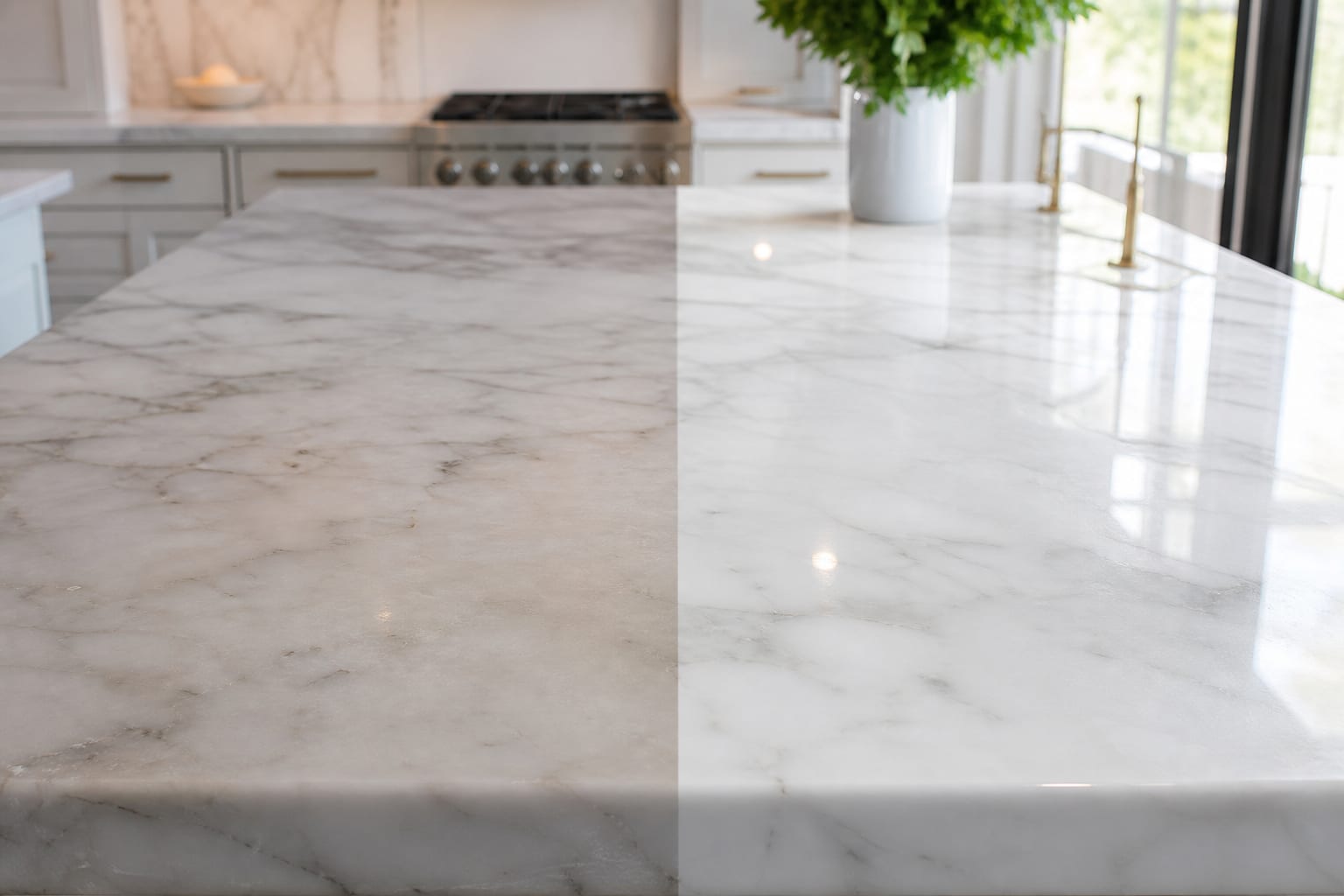
If the whole counter looks evenly dull from buildup, professional deep cleaning gets it back to clean stone.
| What you see | Likely cause | What you can do | How we fix it |
|---|---|---|---|
| Dull ring or pale patch | Etching | Confirm with the stain vs. etch test | Honing and polishing |
| Dark shadow that soaked in | Staining | See the stain removal guide | Stain removal |
| Scratch or chip | Physical damage | Nothing. Don't rub it with polish. | Chip and scratch repair |
A polishing compound can lift light etching on a small spot, but on kitchen counters it often leaves halos. Dullness across the whole counter needs diamond restoration.
| How often | Task | Why |
|---|---|---|
| Daily | Wipe up crumbs and spills | Acid etches in minutes, sealed or not; oil soaks in once the sealer wears |
| Daily | Use coasters and cutting boards | Stops most etching and scratches before they start |
| Weekly | Check by the stove and sink for new rings | Catches etching before it spreads |
| Weekly | Dry the counters after heavy cooking | Cuts oil film and water marks |
| Monthly | Water-bead test near the sink and cooktop | Tells you when to reseal |
| Quarterly | Check the silicone at the sink and backsplash | Water behind the stone causes bigger problems |
| Every 1–2 years | Professional sealing | Sealer wears off with use and cleaning |
| As needed | Send us a photo of any mark that won't clean off | Fixing it early costs less |
These three mistakes do most of the damage we see in a new owner's first year:
Kitchens see more acid and oil, so they usually need resealing sooner. Bathrooms deal with soap film, hard water, and cosmetics, so squeegee marble shower walls and keep cosmetics on a tray. Cloudy shower walls often need shower and grout restoration, since resealing alone won't clear them.
Ask for professional sealing on delivery and a sample piece in your finish. For honed marble in a wet room, plan a layout that's easy to squeegee, and use neutral soap in the dispensers.
Ask for a professional assessment if:
Restoration is still usually cheaper than ripping out a slab you like. See 5 warning signs your marble needs professional restoration, or request an assessment; we can often quote from photos.
Related: Natural stone do's and don'ts · Polished vs. honed · Marble vs. granite · Marble
Stone problems
Our stone problem guides go through etching, stains, scratches, grout, pitting, and more, and explain how we fix each one.
Browse stone problemsFree quote
Send photos or ask us to visit. We'll tell you what the stone is, how we'd fix it, and what it will cost.
No obligation · We reply within one business day