Marble, granite & terrazzo restoration across Ontario since 1972
Call (905) 270-2959Marble, granite & terrazzo restoration across Ontario since 1972
Call (905) 270-2959Basics
Dull patches, etch rings, stains, chips, and dark water marks: five signs your marble needs professional restoration, and what to check at home first.
No obligation · We reply within one business day
By The Marble Clinic, stone restoration in the GTA since 1972
Marble is a favourite for counters, floors, and bathrooms across the GTA, but its polished surface marks easily. The Marble Clinic has restored marble on more than 25,000 stone projects since 1972, and we see these five problems every week.
Some changes are normal wear. Others mean the stone needs honing (grinding back the worn surface with diamond pads) and polishing.
Look for hazy patches, uneven shine in busy areas, or a surface that feels rough. Foot traffic, abrasive cleaners, and years of use wear away the polished finish.
At home: Try a pH-neutral stone cleaner first. If the shine doesn't come back across the whole surface, more cleaning won't help. Our dull stone polishing guide shows what worn polish looks like.
How we fix it: Polishing and honing brings floors, counters, and tile back to a shiny or matte finish, whichever you prefer. We match the sheen to the rest of the stone so repaired areas don't stand out.

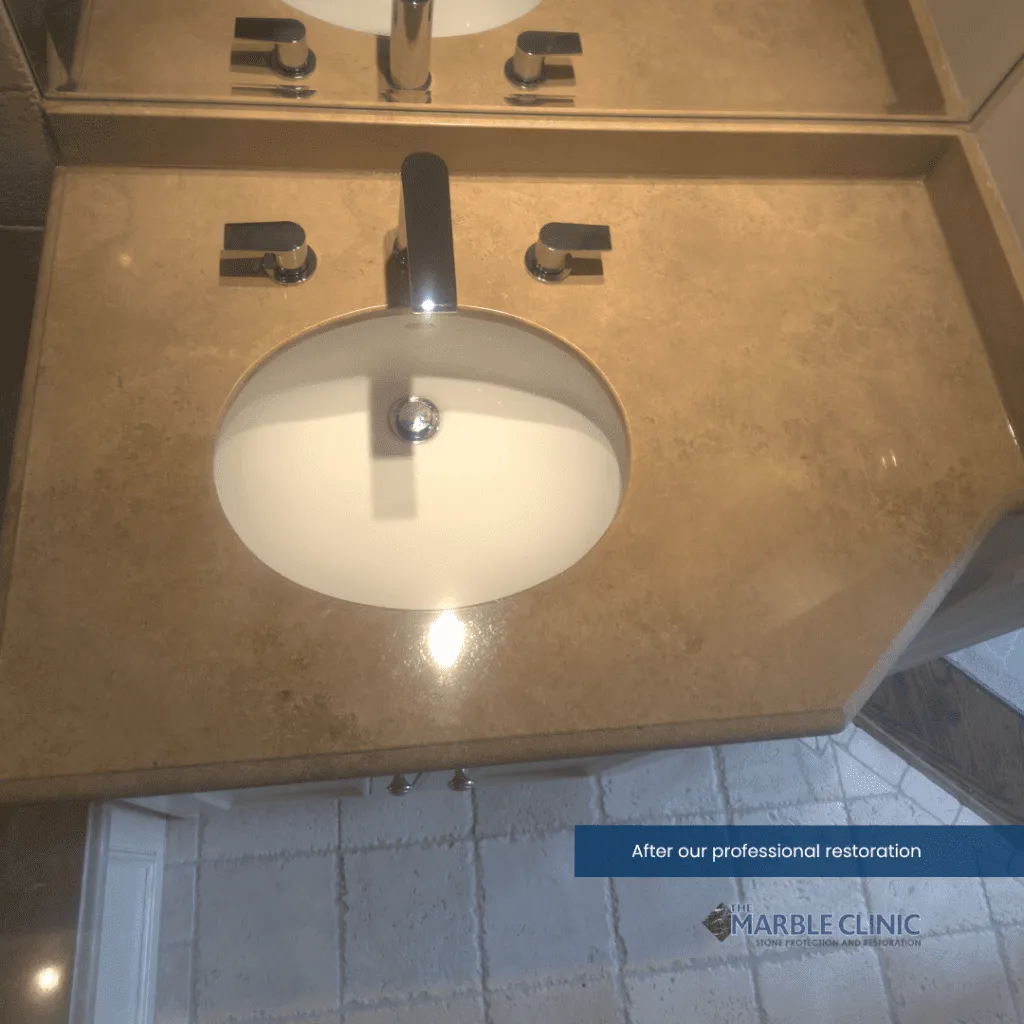
Etching shows up as dull spots, water rings, or pale patches. People often take it for a stain, but it's acid reacting with the calcium carbonate in marble. The usual sources are wine, vinegar, lemon juice, acidic cleaners, and citrus hand soaps.
At home: Use our stain vs. etch test before you treat the mark. Etching can't be cleaned off, and a poultice won't fix it.
How we fix it: Deeper etching needs etch and water-ring removal. More on marble etching.
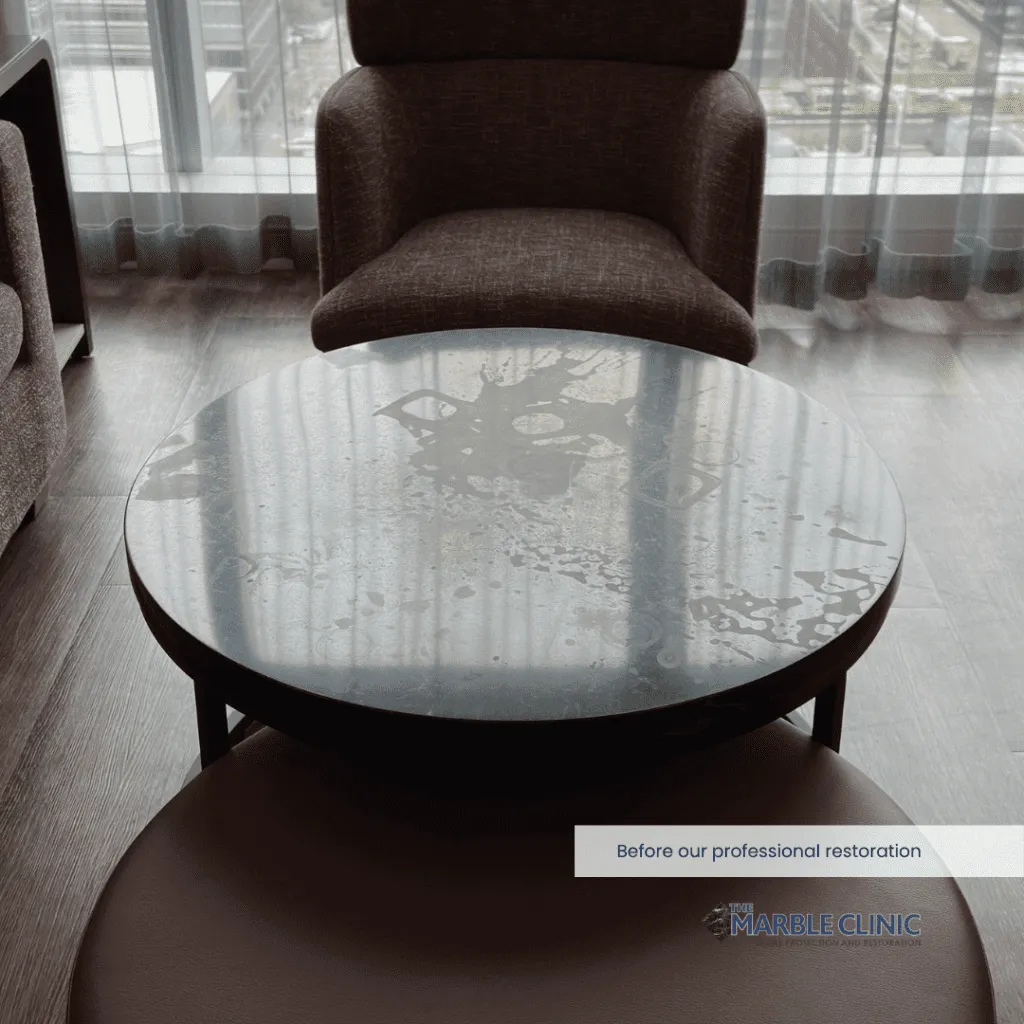

Dark patches that won't wipe away mean liquid has soaked into the stone. Common sources:
At home: Light stains sometimes lift with a poultice, a paste that draws the stain out of the stone. Our stain removal guide explains when a poultice helps and when the mark is really etching.
How we fix it: We draw the stain out with professional stain removal, then apply a sealer that soaks into the stone to slow future staining.
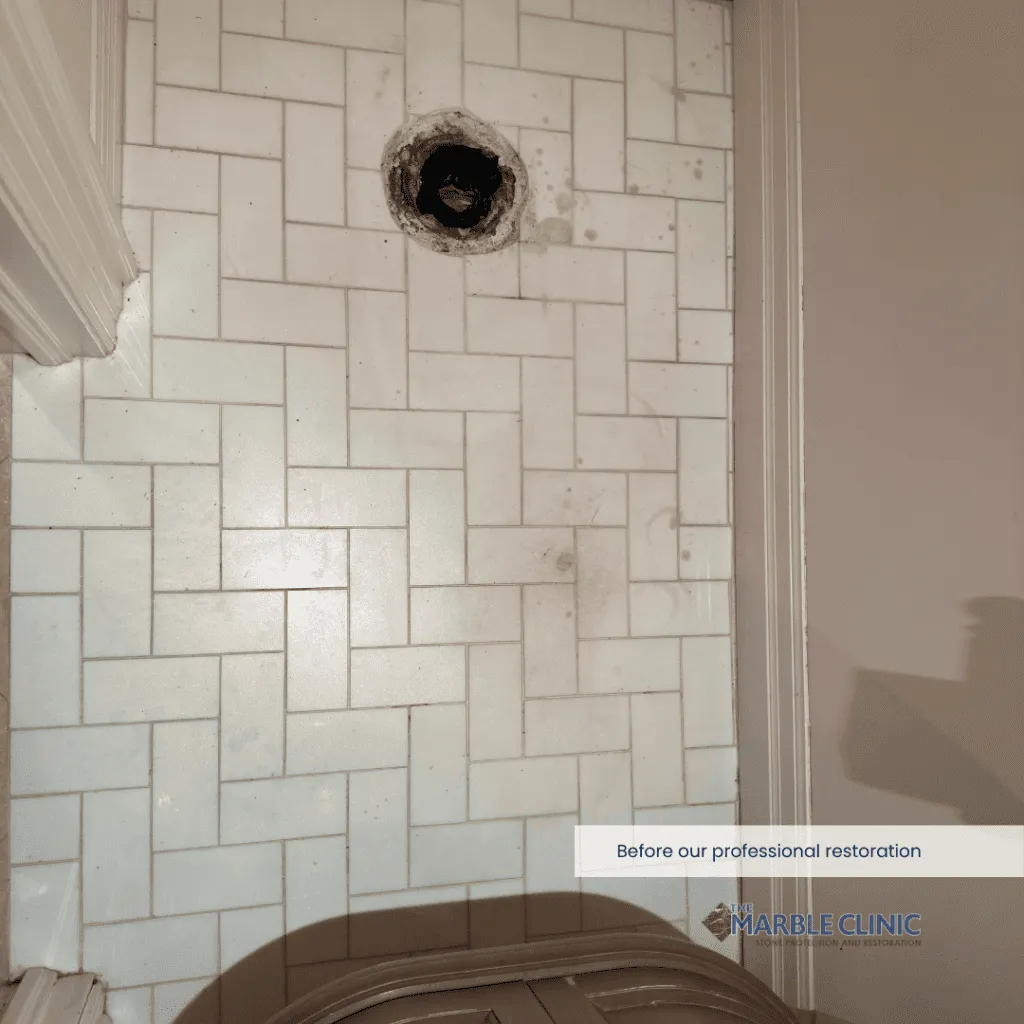
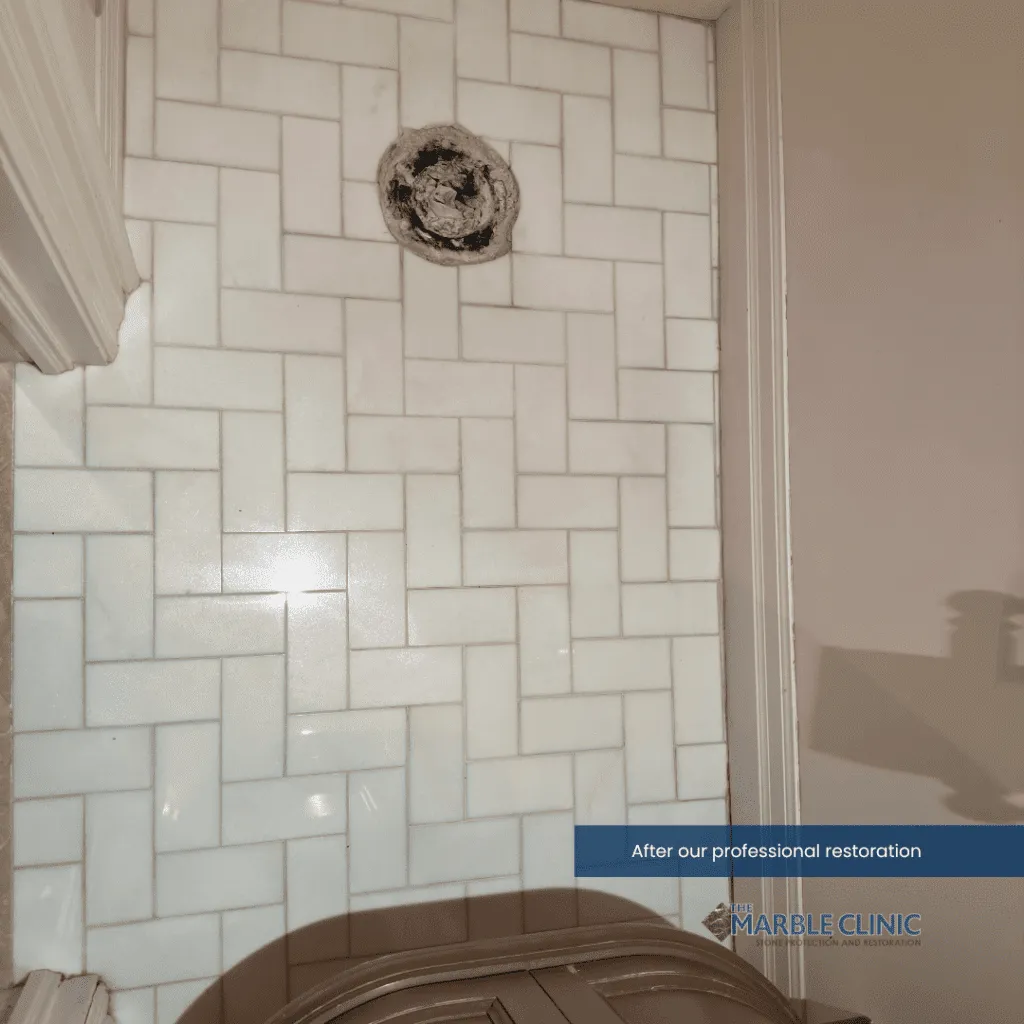
A heavy knock or a shifting subfloor can cause:
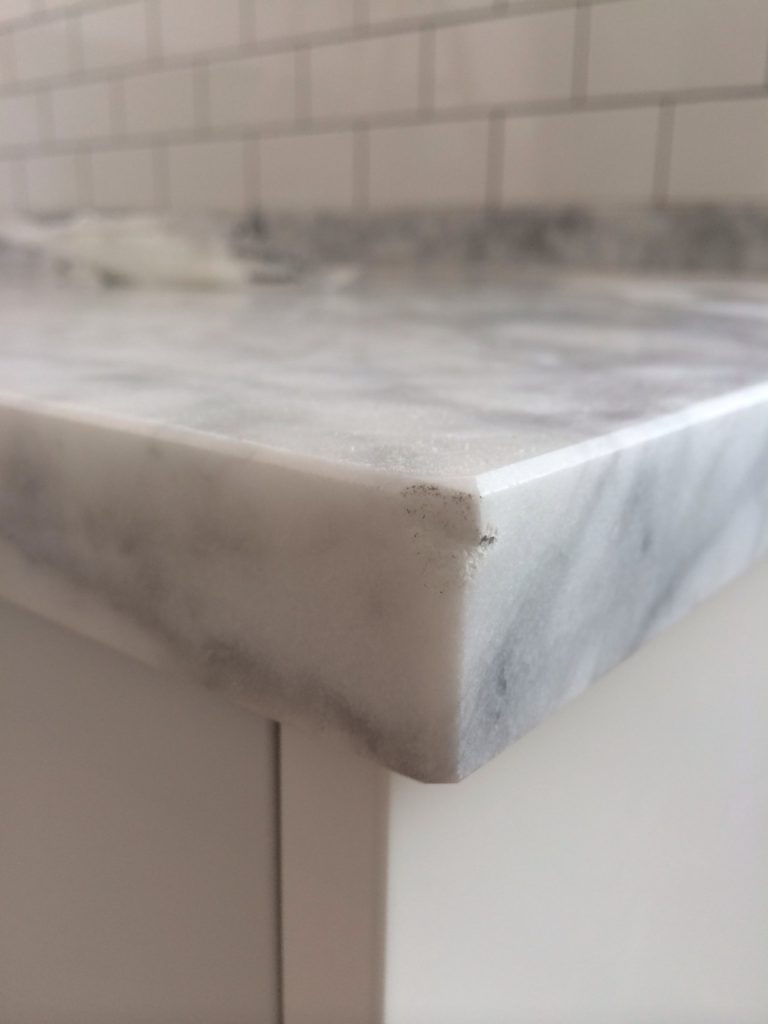
Cracks trap dirt and water and get worse over time, and uneven tiles are a trip hazard.
At home: Don't rub chips with marble polish or steel wool. You'll scratch the stone around them.
How we fix it: We fill chips and cracks with colour-matched epoxy and blend the polish, and flatten uneven floors. See chip and crack repair, scratch repair, and our portfolio for photos.
Dark areas near sinks, showers, or entrances usually mean water is soaking into the stone, because the sealer has worn off or wasn't applied properly at installation. The slab itself is rarely the problem.
At home: Do the water-bead test from our free diagnostic guide. If water darkens the stone within minutes, it's time to reseal. If a dark patch stays after the stone has dried completely, it may be a deeper stain.
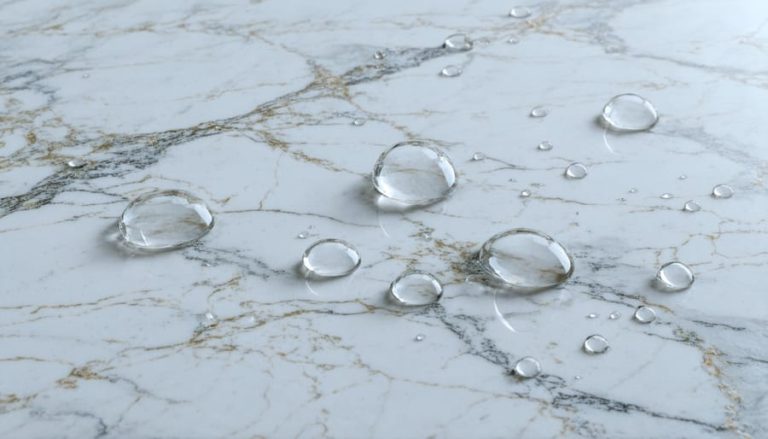
How we fix it: Professional sealing slows water and oil absorption. Shower marble that stays cloudy may need grout restoration or deep cleaning first.
| Sign | Likely cause | What you can do | Our service |
|---|---|---|---|
| Overall dullness | Worn polish | Neutral cleaner | Polishing and honing |
| Rings and pale patches | Etching | Check with the test | Etch removal |
| Dark marks that soaked in | Staining | Poultice light stains | Stain removal |
| Chips and scratches | Physical damage | Nothing | Chip repair |
| Dark areas near water | Worn sealer | Reseal once clean | Sealing |
A single faint ring on a kitchen island can wait until you've checked what it is. Widespread dullness, loose tiles, or rust streaks in a shower shouldn't wait, because water and grit make the damage worse.
For condo owners, restoring the stone in stages, then keeping it up with regular maintenance, costs a fraction of new stone.
Before you clean, take photos in daylight and under overhead lights to send with your request. For chips and cracks, put a coin or ruler in the shot.
A good polishing compound sometimes fixes light etching on a small area. On kitchen counters, DIY buffing often leaves halos and uneven shine. Widespread etching needs professional diamond restoration.
Sealing slows absorption but doesn't bring back shine. If water beads but the stone is dull, the sealer is probably fine and the polish is worn, so it needs honing and polishing. If water darkens the stone quickly, clean it and reseal.
It depends on the size of the area, the finish, and the damage. Restoration almost always costs less than replacing the slab, and we can often quote from photos.
Honing and polishing remove etching, many stains, and wear. The stone often looks better than it did on move-in day. Deep cracks or years of neglect can limit the result, and we'll tell you that up front.
Request a free assessment, or browse our stone problem guides. We serve the GTA and surrounding areas.
After restoration: Marble countertop care guide · 5 bad habits that damage marble floors · Marble
Stone problems
Our stone problem guides go through etching, stains, scratches, grout, pitting, and more, and explain how we fix each one.
Browse stone problemsFree quote
Send photos or ask us to visit. We'll tell you what the stone is, how we'd fix it, and what it will cost.
No obligation · We reply within one business day