Marble, granite & terrazzo restoration across Ontario since 1972
Call (905) 270-2959Marble, granite & terrazzo restoration across Ontario since 1972
Call (905) 270-2959Basics
A lemon juice and oil test to run at the stone yard, a slab checklist, and what each result means for a granite kitchen counter.
No obligation · We reply within one business day
By The Marble Clinic, stone restoration in the GTA since 1972
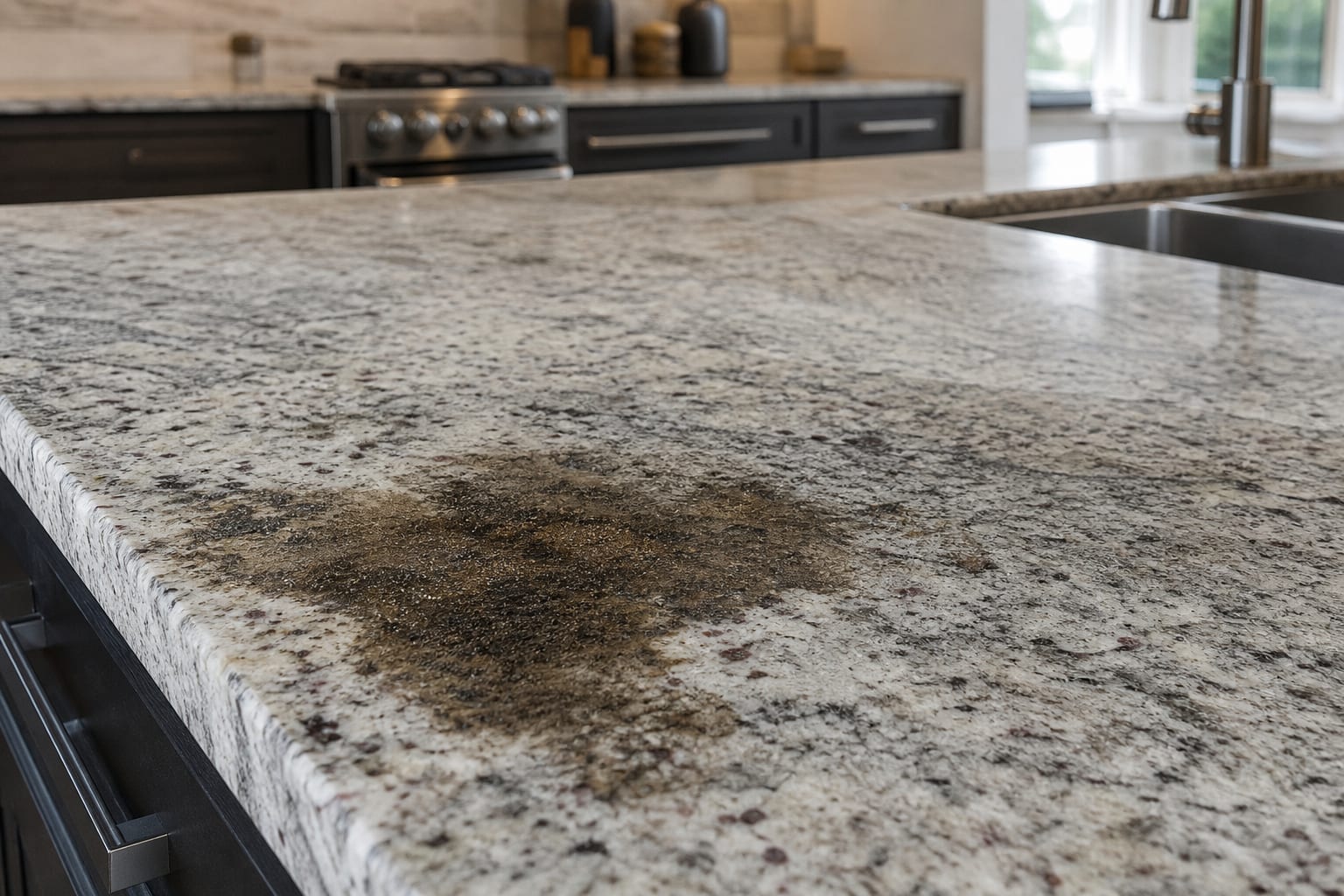
Not every slab sold as granite behaves like granite. Some contain enough calcite to etch like marble. Others absorb so much that cooking oil leaves a permanent dark shadow within weeks, however often you seal.
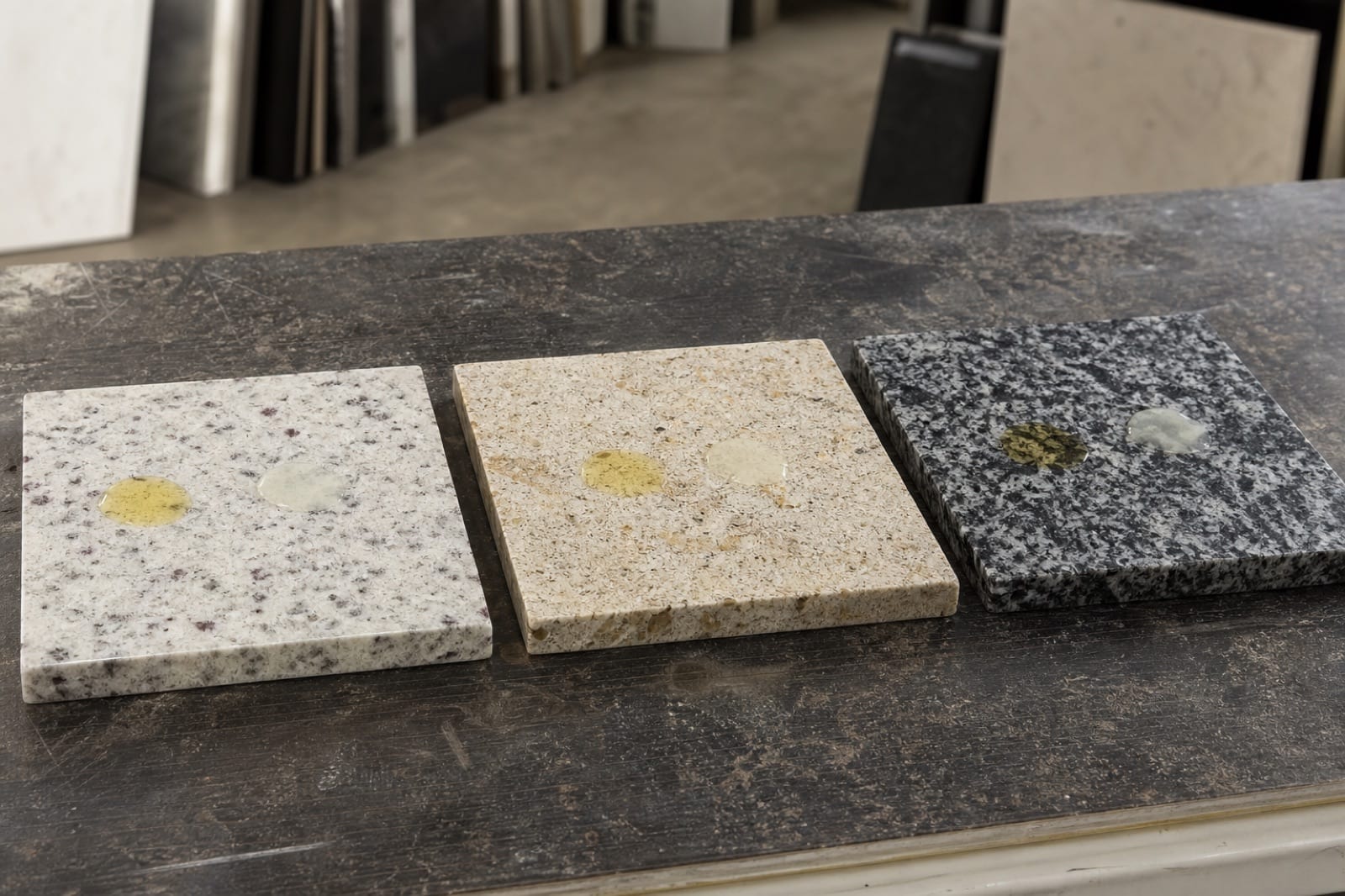
Before you fall for a slab's colour, run a lemon juice and oil test at the stone yard. It has saved our clients thousands in early restoration and regretted rip-outs.
Absorbent stone soaks up water, oil, and wine. Sealer slows that down, but it can't turn a sponge into plastic, and a very absorbent slab still stains if you let the sealing slide.
True granite is mostly quartz and feldspar, which stand up well to acid. Stones with a lot of calcite react to lemon and tomato like marble does, leaving dull etch marks instead of dark stains.
For a main kitchen counter, you want a slab that does neither.
You'll need: a sample or hidden corner of each slab, paper towel, lemon juice, and cooking oil (canola or olive).
Very absorbent. Skip it for main prep areas unless you'll seal often and wipe every spill at once. In a low-use spot, have it professionally sealed on day one.
Moderately absorbent, and fine for many kitchens with a good sealer and good habits. Reseal when the water-bead test fails, usually every one to two years on a kitchen counter.
Dense stone that absorbs little, and an ideal kitchen candidate. Seal it anyway, since all natural stone benefits, but expect much less upkeep.
Also watch for etching: If the lemon leaves a dull, lighter patch after you wipe it (not a dark stain), the stone reacts to acid, however little it absorbs. Care for it like marble; see marble etching.
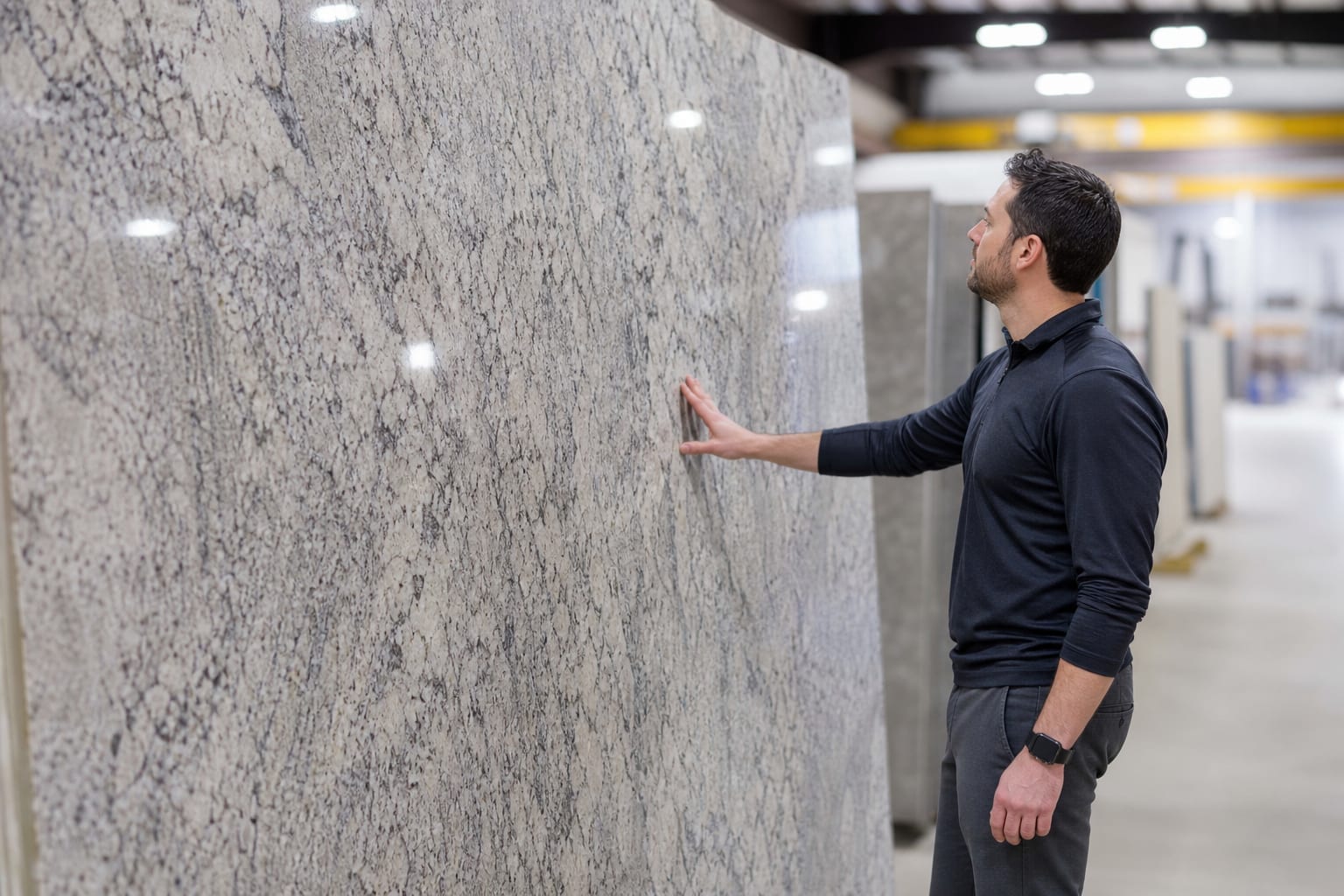
Go through this before you pay a deposit, and send us photos if you'd like a second opinion.
| Check | What to look for | Red flag |
|---|---|---|
| Stone name | The geological name, not the sales name | "White granite" that etches like marble |
| Whole slab | Colour variation across the slab | Big swings you didn't see on the sample |
| Fissures | Fine natural lines in the stone | Open, wide, or shifted fissures at cutouts |
| Pitting | Tiny dimples in the surface | Lots of pits, if you want it glass-smooth |
| Factory resin | Was the slab treated with resin? | Affects polishing and repair later |
| Finish | Polished or honed, on your slab | Honed needs sealing more often |
| Thickness | 3 cm or 2 cm for spans | Thin stone over a dishwasher with no support |
| Edge sample | How the edge profile feels | Brittle veining at an ogee edge chips easily |
| Sealing plan | Who seals, with what, and when | "The homeowner will do it later" |
| Cutouts | Sink, cooktop, and faucet holes on the template | Weak veining at narrow sections |
| Lighting | The slab in daylight, if possible | Showroom spotlights hide dull areas and fill |
| Lemon and oil test | On each finalist | Instant darkening or a dull etch |
Also ask whether the warranty covers structural fissures or only the stone's natural features. Still choosing a material? See selecting the right stone and marble vs. granite.
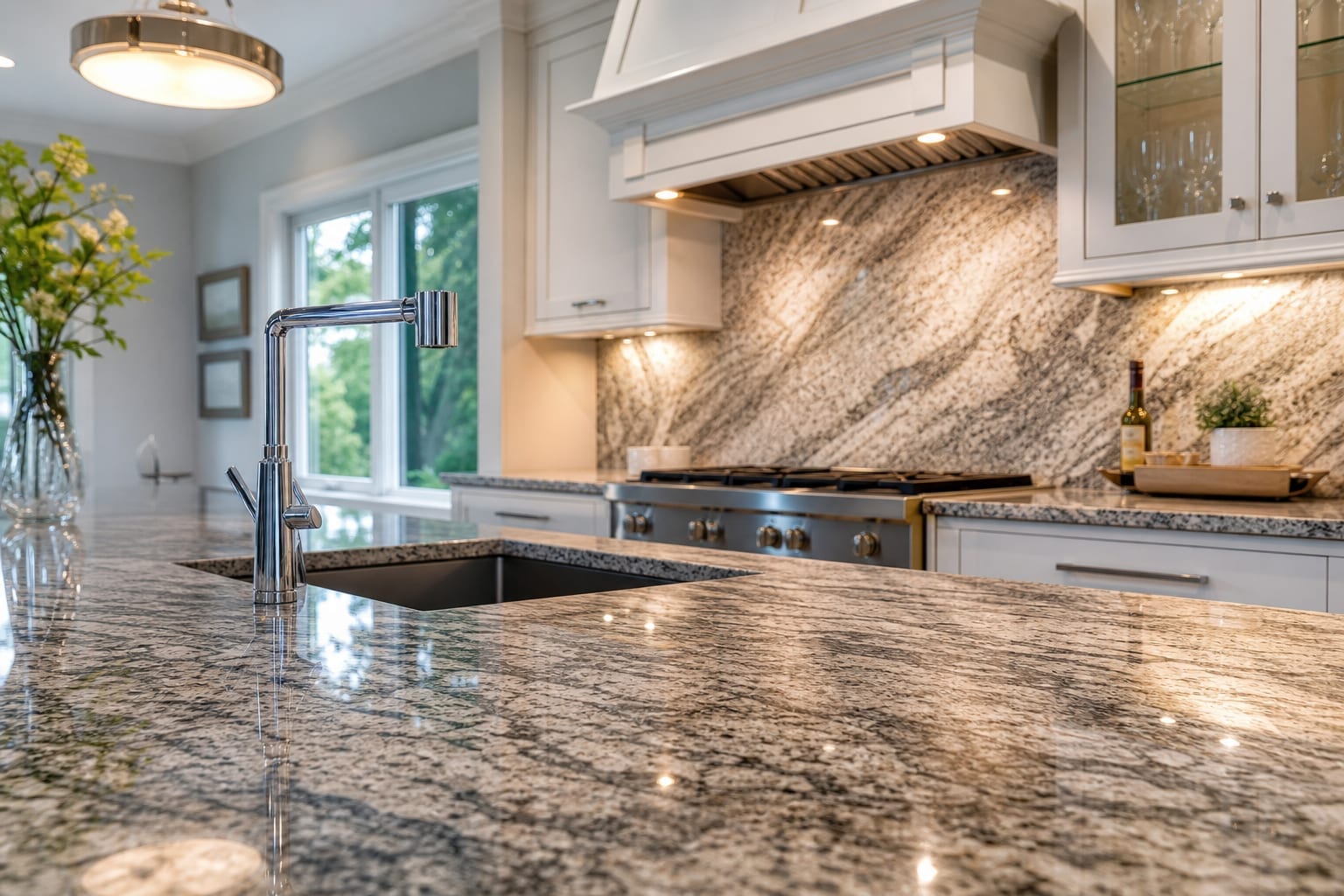
Even a perfect slab needs sealing at install, and skipping it is the most common avoidable mistake we see. Do the water-bead test in the first month to check it was done. After that:
A mark that won't lift may need stain removal or chip repair, not a new counter.
Lighter granites (whites, pale greys, and stones with soft movement) often absorb faster and show stains sooner than dense blacks and charcoals, so sealing matters more. With a light slab, do the water-bead test near the sink every three months for the first year, and have it sealed on day one by a stone restoration company rather than with a hardware-store product.
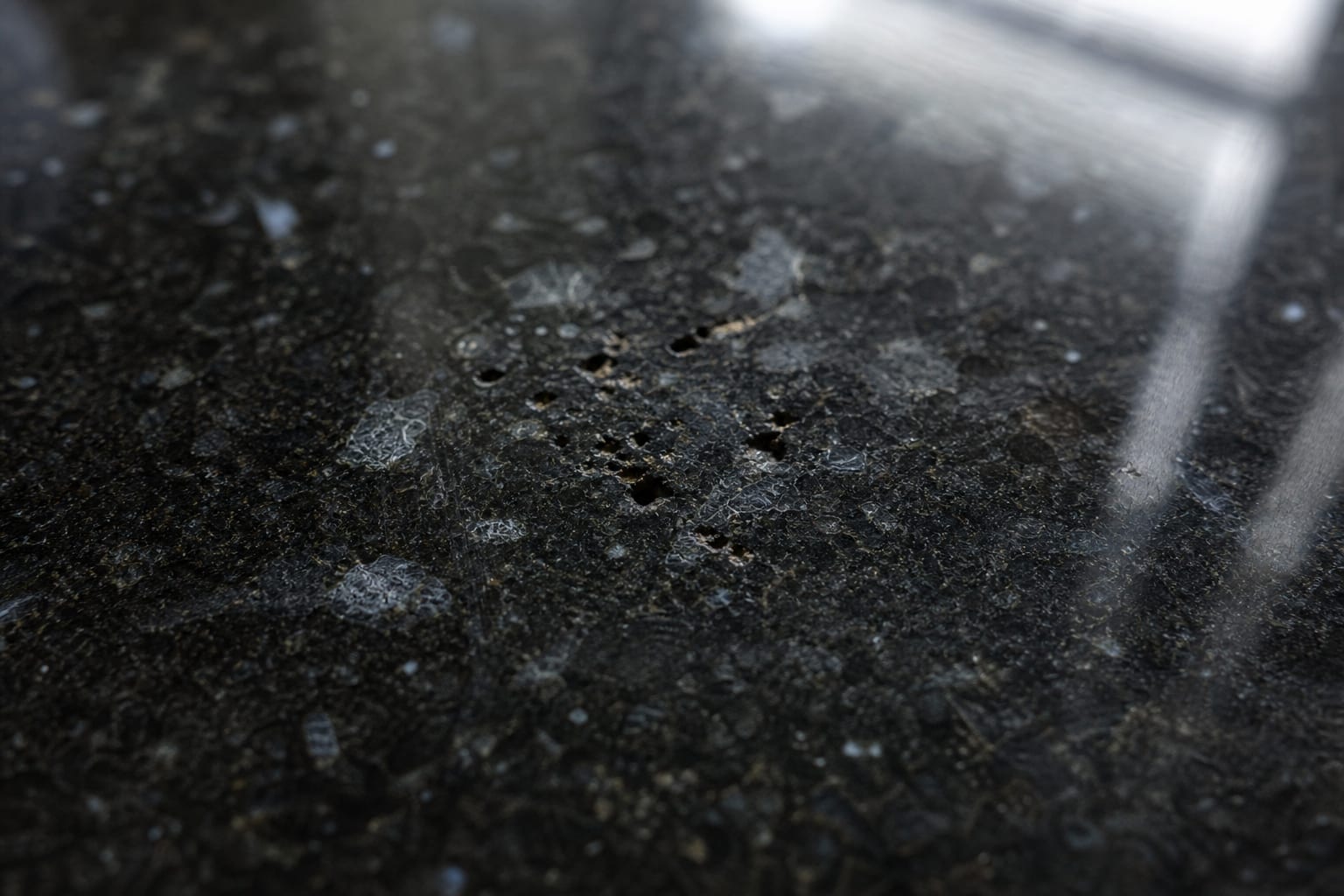
Ogee and dupont edges look formal but leave more thin stone exposed, while simple eased or pencil edges chip less. Ask your fabricator which edge suits your stone's veining. At home, set pots down gently and never slide appliances across the stone.
Edge chips are routine chip repair for us, filled with colour-matched epoxy, and they rarely mean a new counter.
Stone yard lighting flatters. Tape samples near your cabinets, flooring, and paint, and check them morning and evening; a slab that glowed under showroom spotlights can clash under LED downlights. Repeat the lemon and oil test overnight in your own kitchen, where real humidity and temperature come into play.
Choosing between finalists? Send us photos of your test results, and we'll tell you which slab will hold up best in your kitchen.
Related: Holes in granite · When to replace granite · Granite hub
Stone problems
Our stone problem guides go through etching, stains, scratches, grout, pitting, and more, and explain how we fix each one.
Browse stone problemsFree quote
Send photos or ask us to visit. We'll tell you what the stone is, how we'd fix it, and what it will cost.
No obligation · We reply within one business day